

Quick answer: Central ducted HVAC is usually best when you want whole-home comfort through existing ductwork. Mini splits are usually best when you want zoning, room-by-room control, higher efficiency in certain layouts, or you don’t have ducts (or don’t trust them).
The Main Difference: Ducts vs Zones
Central HVAC uses ducts to push conditioned air throughout the home. It’s simple for homeowners: one thermostat, one system, whole-house comfort.
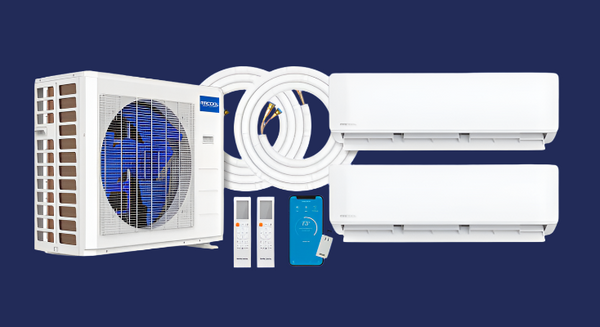
Mini splits deliver comfort directly to specific rooms or zones through one or more indoor air handlers. You control temperatures by area, not the whole home at once.
Cost Comparison: Equipment vs Installed Cost
Installed cost depends heavily on labor, ductwork, electrical, and layout. But in general:
- Central systems often have higher labor cost when ducts need repairs, resizing, or replacement.
- Mini splits can have lower labor cost in homes without ducts or where ductwork is a mess.
- Multi-zone mini splits can get pricey when you’re conditioning many rooms, but they bring comfort advantages.
Real-world takeaway: The “cheapest” option is usually the one that doesn’t require rebuilding your duct system.
Comfort & Zoning: Why Mini Splits Win in Many Homes
Mini splits shine because they’re naturally zoned. That means:
- Different temperatures per room (bedrooms cooler, living spaces warmer, etc.)
- Less waste conditioning unused areas
- Better comfort in rooms that central HVAC struggles with (bonus rooms, additions, upstairs bedrooms)
Central ducted HVAC can still zone, but it usually requires dampers, extra controls, and ductwork that behaves itself. That’s… optimistic in a lot of homes.
Efficiency: Which One Uses Less Power?
In many setups, mini splits can be more efficient because they:
- Use inverter technology that modulates output instead of cycling hard on/off
- Avoid duct losses (leaky ducts can waste a surprising amount of capacity)
- Allow you to condition only occupied rooms
Central ducted systems can still be very efficient, especially modern inverter-based ducted heat pumps. But duct condition matters a lot.
Installation Reality: Which One Is Easier?
- Mini splits: Great when you don’t have ducts, want quick installs, or need room-by-room solutions. DIY-friendly options exist when using pre-charged components and correct sizing.
- Central ducted: Great when ducts already exist and are sized/conditioned properly. If ducts are undersized, leaky, or poorly routed, costs and complexity go up.
Rule: If the ducts are good, central is clean and simple. If the ducts are bad, mini splits start looking like the smarter decision.
Best Use Cases (So You Pick the Right One)
Central Ducted HVAC Is Usually Best If…
- You already have decent ductwork
- You want one thermostat for the whole home
- You want a traditional “whole-house” system
- You prefer hidden equipment (no wall-mounted indoor units)
Mini Splits Are Usually Best If…
- You want zoning and better room-by-room comfort
- You don’t have ducts (or they’re terrible)
- You have hot/cold rooms, additions, bonus rooms, or uneven comfort
- You want high efficiency and modern inverter performance
Which One Should You Buy?
If you want the simplest decision path:
- Have solid ductwork? Central ducted systems are usually the best “whole-home” solution.
- No ducts or comfort problems? Mini splits solve problems central systems often struggle with.
- Want both? Many homeowners use central for most of the house and a mini split for problem rooms.
Shop by system type:
Central vs Mini Split FAQ
Is a mini split cheaper than central air?
It depends. Mini splits can be cheaper when you don’t have ducts or your ductwork needs major repairs. Central can be more cost-effective when ductwork is already in good shape.
Do mini splits work for whole homes?
Yes, especially multi-zone setups, but sizing and layout matter. Whole-home comfort is achievable when zones are planned correctly.
Which is better for uneven temperatures?
Mini splits often win because they deliver direct zoned control to problem areas without relying on duct balancing.
Are mini splits more efficient than central air?
In many zoned use cases, yes. Central can still be very efficient, but duct losses and cycling behavior can reduce real-world efficiency.
Ready to shop systems?
Browse DIY-friendly systems with real HVAC support behind the sale.