
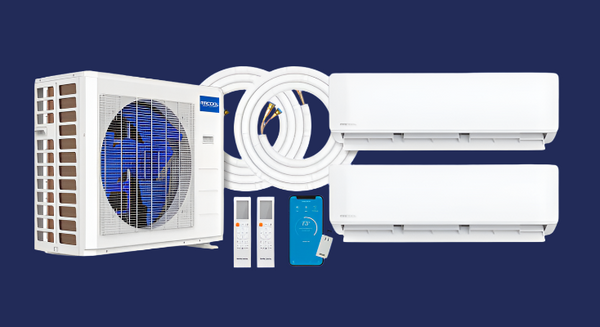

How To Size a 3-Zone Mini Split System
Learn how to properly size a 3-zone mini split system for multi-room applications including bedrooms, garages, additions, offices, workshops, apartments, and open living areas. This HVAC sizing guide explains BTU matching, indoor unit balancing, condenser sizing, wall-mounted vs ceiling cassette air handlers, insulation impact, airflow, and common 3-zone mini split sizing mistakes.

Recommended 3-Zone Mini Split Configurations
Use these 3-zone mini split recommendations as a starting point for matching multiple rooms to the correct indoor air handler sizes and outdoor condenser capacity. Actual sizing may vary depending on insulation, ceiling height, windows, climate zone, airflow, room usage, and whether one or more zones carry higher heating or cooling loads.
9k + 9k + 9k Systems
Best for three bedrooms, offices, apartments, or smaller rooms with similar heating and cooling demands.
9k + 12k + 12k Systems
Ideal for a combination of bedrooms, living spaces, additions, garages, and offices with varying room loads.
12k + 12k + 18k Systems
Designed for larger open living rooms, garages, workshops, sunrooms, or additions paired with smaller secondary rooms.
18k + 18k + 12k Systems
Best for larger homes, workshops, garages, multi-story layouts, or spaces with higher heating and cooling demands.
3-Zone Mini Split Systems
A 3-zone mini split system allows you to independently heat and cool three separate rooms or areas using one outdoor condenser connected to three indoor air handlers.
- ✓ Independent temperature control
- ✓ Multi-room heating and cooling
- ✓ One outdoor condenser
- ✓ Flexible room-by-room zoning
Mix Wall Units & Ceiling Cassettes
MRCOOL DIY multi-zone systems allow you to combine wall-mounted air handlers and ceiling cassette units in the same system. This flexibility helps match different room layouts, ceiling heights, airflow needs, and design preferences.
- ✓ Wall-mounted air handlers
- ✓ Ceiling cassette options
- ✓ Mixed indoor unit configurations
- ✓ Flexible room layouts
Proper Room Balancing Matters
Each indoor air handler should be matched to the actual room load it serves. Bedrooms, garages, workshops, additions, offices, and open living spaces rarely require identical BTU capacity.
- ✓ Room-by-room BTU sizing
- ✓ Better humidity control
- ✓ Improved comfort balance
- ✓ Real HVAC load matching
Common 3-Zone Mini Split Sizing Mistakes
Many homeowners incorrectly size 3-zone mini split systems by focusing only on total square footage instead of balancing each room individually. Proper HVAC sizing considers room layout, insulation, ceiling height, airflow, climate conditions, sun exposure, and whether one zone carries a significantly higher heating or cooling load. Modern inverter-driven systems are flexible, but proper room-by-room sizing still plays a major role in comfort, humidity control, and long-term efficiency.
Oversizing the System
An oversized single-zone mini split may cool the room too quickly without running long enough to remove humidity properly. This can cause short cycling, uneven comfort, and reduced efficiency.
Ignoring Ceiling Height
Rooms with vaulted ceilings, tall garages, shops, and open spaces contain more air volume than standard rooms. Higher ceilings may require additional BTU capacity.
Trying To Cool Multiple Closed Rooms
A single-zone mini split is designed for one primary open space. Closed bedrooms, hallways, or separated rooms may not receive enough airflow from one indoor air handler.
Sizing a Garage Like a Bedroom
Garages often have poor insulation, large doors, concrete floors, and more heat gain. A garage may need more capacity than a similarly sized bedroom or office.
Ignoring Sun Exposure and Windows
Large windows, west-facing rooms, sunrooms, and spaces with heavy afternoon sun can increase cooling demand. Square footage alone may understate the true load.
Choosing Only By Square Footage
Square footage is only a starting point. Professional mini split sizing also considers insulation, climate, ceiling height, room usage, airflow, and heat load.
3-Zone Mini Split Sizing FAQ
Get answers to common questions about sizing a 3-zone mini split system, choosing BTU combinations, balancing indoor air handlers, mixing wall-mounted and ceiling cassette units, and properly matching multi-room heating and cooling loads.
Using The Same BTU Size Everywhere
Three rooms rarely have identical heating and cooling loads. Bedrooms, garages, workshops, additions, and open living spaces often require different indoor unit sizes.
Ignoring Airflow Between Zones
Closed doors, hallways, ceiling height, and room layout can dramatically affect airflow and temperature consistency between rooms.
Oversizing The Largest Zone
Modern inverter systems are more flexible than older single-stage equipment, but extreme oversizing can still reduce humidity control and overall efficiency.
Not Considering Heating Demand
In colder climates, heating performance often becomes more important than cooling load. HVAC technicians may size slightly larger within reasonable limits when winter heating is the primary concern.
Poor Indoor Unit Placement
Wall-mounted air handlers and ceiling cassette systems both require proper placement for airflow, room coverage, and comfort balance.
Can I mix wall-mounted and ceiling cassette air handlers on a MRCOOL DIY multi-zone system?
Yes. MRCOOL DIY multi-zone systems allow compatible combinations of wall-mounted air handlers and ceiling cassette units, giving homeowners more flexibility for different room layouts, ceiling heights, airflow needs, and design preferences.
Choosing The Wrong Air Handler Style
Some rooms work better with ceiling cassette units, while others are ideal for wall-mounted systems. Matching the indoor unit style to the room layout improves both airflow and aesthetics.
Can a 3-zone mini split heat and cool an entire home?
Yes, a properly sized 3-zone mini split system can heat and cool many homes, apartments, additions, workshops, and multi-room layouts. The key is matching each indoor air handler to the actual room load while selecting the correct outdoor condenser capacity for the combined demand.
Is a ceiling cassette better than a wall-mounted mini split?
It depends on the room layout and installation goals. Wall-mounted air handlers are extremely popular for bedrooms, living spaces, garages, and offices because they are simple to install and highly efficient. Ceiling cassette units are often preferred when homeowners want a cleaner built-in appearance, better central airflow, or less visible wall equipment.
Can I install a 3-zone MRCOOL DIY system myself?
Yes. MRCOOL DIY multi-zone systems are designed for homeowner installation using pre-charged Quick Connect line sets that do not require vacuuming or specialized HVAC equipment in most standard installations. Many homeowners install combinations of wall-mounted air handlers and ceiling cassette systems themselves, while others choose professional installation depending on the layout and complexity.
Need Help Choosing the Right 3-Zone Mini Split?
Expert HVAC Sizing Support
Real-world recommendations based on insulation, ceiling height, climate zone, airflow, and room usage.
DIY & Professional Systems
Compare MRCOOL DIY mini splits and traditional installation-ready systems in one place.
Trusted MRCOOL Dealer
Authorized MRCOOL dealer helping customers nationwide choose properly sized systems.
Nationwide Shipping
Fast shipping available across the lower 48 states for mini split systems, accessories, and parts.